Metro Vancouver · 24/7

Basement flooding

Groundwater, sump failure, or a supply line — we find the source, make it safe, extract, and dry the suite.

Technician in rubber boots checking a foundation wall by flashlight in a flooded basement, with a submersible pump running in the standing water.
FIG. S — BASEMENT · METRO VANCOUVER

Where the water went

Four source paths

Upstairs bathroom

  1. Source at the fixture or supply
  2. Down through the ceiling cavity
  3. Along joists
  4. Wall base two rooms away
  5. Subfloor under flooring that still looks fine

What looks fine but isn’t: Ceiling two rooms over · Wall base below the source · Subfloor under intact flooring
Kitchen

  1. Dishwasher, fridge line, or sink supply
  2. Into the kick space and cabinet floor
  3. Through the subfloor
  4. Into the ceiling of the room below if stacked

What looks fine but isn’t: Cabinet backs that look dry · Adjacent pantry toe-kick · Ceiling below

Roof

  1. Penetration or valley
  2. Attic insulation
  3. Ceiling drywall
  4. Exterior wall cavity on the downhill side

What looks fine but isn’t: Insulation that holds water out of sight · Top plates · Windows below the leak

Basement floor

  1. Slab or crawl
  2. Up the bottom plate
  3. Into the first wall cavity
  4. Under finished flooring at the edge

What looks fine but isn’t: Bottom plates · Carpet tack strip · The 'dry' corner on the other side of the room

On the job

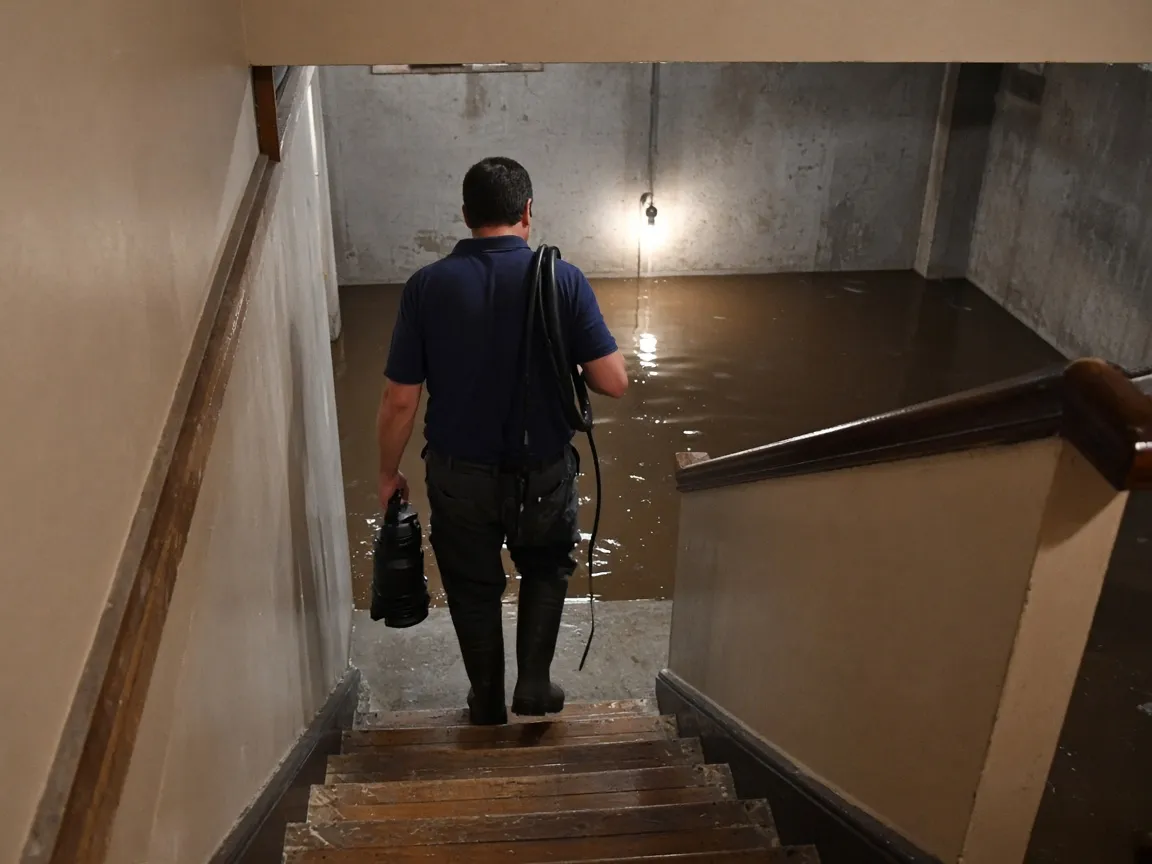
Technician carrying a submersible pump down the basement stairs toward standing water.
FIG. A — ARRIVAL
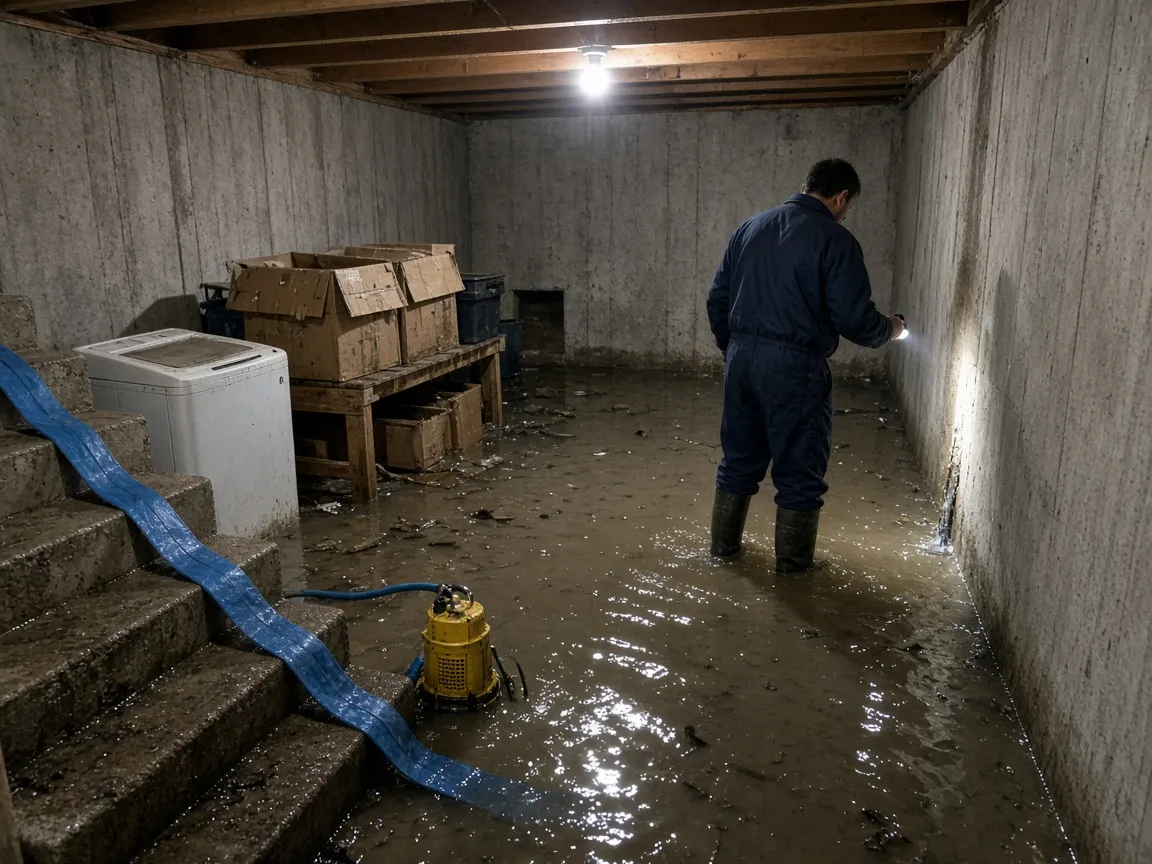
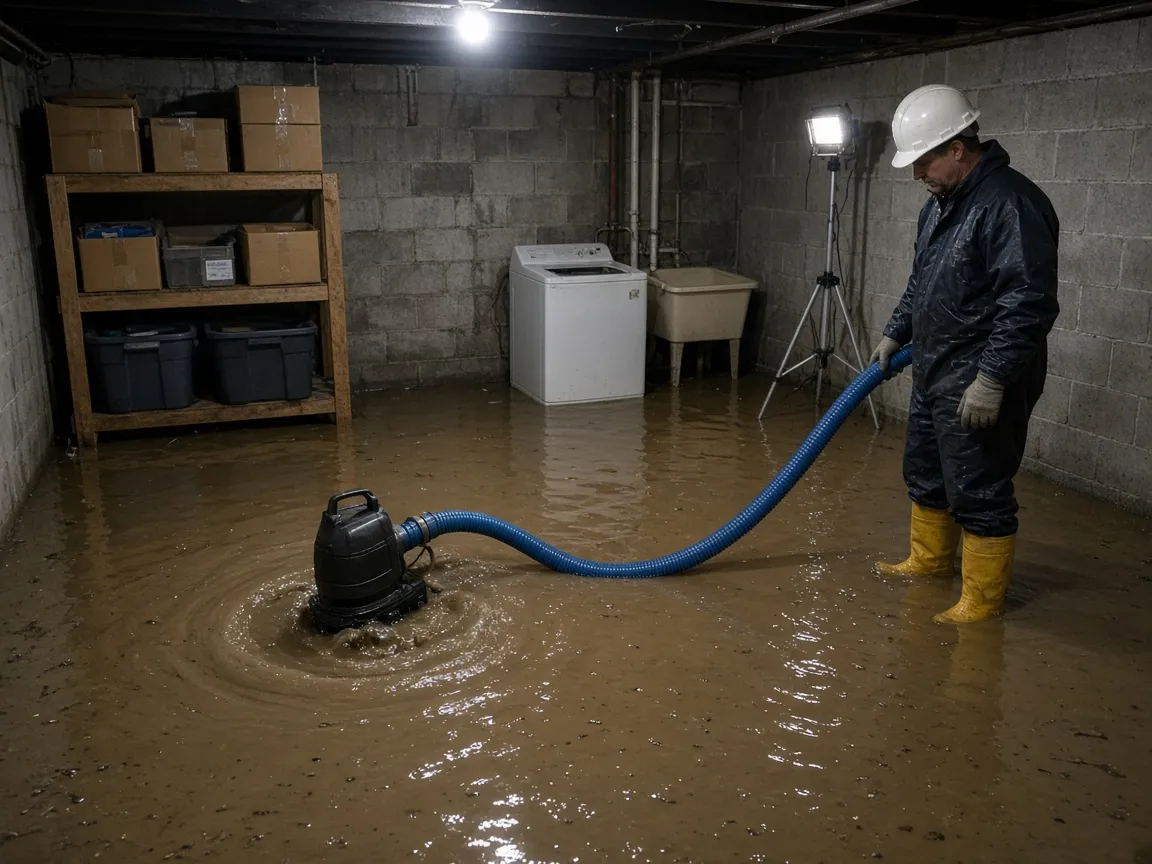
Submersible pump running in a flooded basement, discharge hose run out and a technician watching the water level.
FIG. B — IN PROGRESS
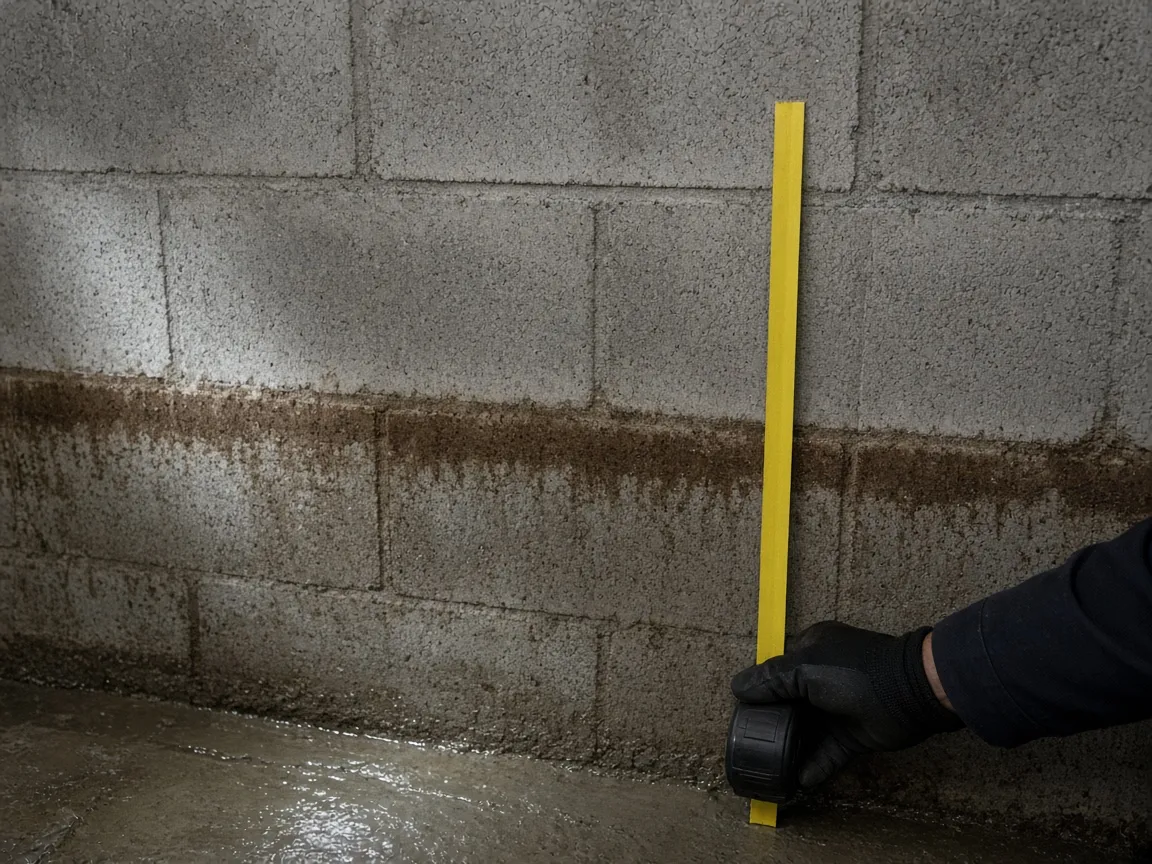
Tape measure held against a basement block wall to record the height of the tide line left by the flood water.
FIG. C — TIDE LINE

Spec plate

  • Electrical hazard first
  • Sump and perimeter drains
  • Suites and tenants

Questions

Is it safe to walk through a flooded basement?

Not if outlets or the panel are in the water. Kill power from a dry location if you can do it safely. If you cannot, wait for us.

How do you tell groundwater from a burst pipe?

Source, water category, and where it entered. Groundwater through a failed sump is a different dry-out than a clean supply line. Both still need extraction tonight.

We have a basement suite. What about the tenant?

Document, photograph, and keep them out of standing water. We coordinate access. Strata and tenancy questions belong with your council — we are not legal advice.

Will the perimeter drain need work?

If groundwater is the source, drying the room without addressing the drain is a repeat job. We will say so. Rebuild of drains is quoted after dry-out.

How fast do you reach Richmond or Burnaby basements?

Both are Tier 1: 60-minute worst-case target. Call the 24/7 line.

What does a typical basement job include?

Extraction, equipment, daily readings, and selective demolition if cavities stay wet. Rates are published. Rebuild is a separate written scope.

Also:Water extraction · Structural drying

Still wet? Call.

We answer 24/7 — a person, not a service. If you would rather not talk, tell us what happened in four taps and we will call you.