First hour

Sewage backup

01

Leave the area. This is Category 3.

02

Keep people and pets out. Do not clean it yourself.

03

Photograph from a dry, safe place. Then call.

Shutoff finder

Where is the valve?

Detached house

Likely locations

  1. Front wall, often in a closet or behind an access panel near where the municipal line enters.
  2. Mechanical room, laundry, or crawl-space entry on older stock.
  3. Meter box at the street — last resort, and not always yours to operate.

Ball valves close with a quarter turn, handle across the pipe. Gate valves close clockwise several turns. If it will not move, stop. Forcing a seized gate can snap it.

You can usually operate a domestic main in a house you own. If you rent, tell the owner and still shut it if water is moving and you can do so safely.

Townhouse

Likely locations

  1. Unit mechanical closet, often at the front or in the garage.
  2. Shared chase — do not assume the valve in your laundry is the building main.
  3. End-unit meter or a locked common room.

Same ball vs gate rule. Labelled 'domestic water' is the one you want. A heating loop valve is not it.

Many townhouse strata have a shared main. If your valve does not stop the leak, call the building and us. Do not open someone else's closet.

Low-rise condo

Likely locations

  1. In-suite shutoff under a sink or behind the washing machine — this stops your fixture, not the stack.
  2. Parkade or ground-floor service room — usually keyed.
  3. Riser closet in the corridor — not yours to force.

If the leak is a stack or a neighbour's line, your in-suite valve will not finish it.

Call the building. Then call us. For most condo residents, not touching the riser is the correct answer.

High-rise condo

Likely locations

  1. In-suite fixture valves only.
  2. Floor shutoff in a locked service room.
  3. Building main — operations or overnight security.

Do not enter a riser closet. Do not operate a floor valve you were not shown.

Call the concierge or after-hours number, then Calder. We will work with whoever has keys.

How long has it been wet?

The damage clock

These bands are what water does to a building as the hours pass, shaped by IICRC S500 guidance and the jobs we run. Not a countdown — the hour a given material turns depends on how much water there was, how warm the room is, and what the water was carrying. Use it to work out which job you have, then call whichever band you are in.

0–6 hours

Hour 6

Water is still spreading through subfloor and wall cavities.

Still salvageable: Hardwood · Drywall · Insulation · Cabinetry · Carpet + underlay

Water category: 1 — clean

Most of this is still recoverable. That changes tomorrow.

6–24 hours

Hour 24

Absorption into subfloor and cavities. Carpet underlay at risk.

Still salvageable: Hardwood · Drywall · Insulation · Cabinetry

At risk: Carpet + underlay

Water category: 1 — degrading

The underlay is the first material we usually lose. Call while the rest is still a drying job.

24–48 hours

Hour 48

Mould growth begins in this window. Drywall and insulation at risk. Category 1 becomes Category 2.

Still salvageable: Hardwood · Cabinetry

At risk: Drywall · Insulation · Carpet + underlay

Water category: 2

This is now a remediation job, not a drying job. Call.

48–72 hours

Hour 72

Insulation typically lost. Hardwood cupping. Cabinetry swelling.

At risk: Hardwood · Cabinetry · Drywall

Typically lost: Insulation · Carpet + underlay

Water category: 2

We can still dry the structure. Some finishes will not return to what they were.

72 hours and after

Hour 72+

Structural drying takes materially longer. Mould remediation likely required. Category 3 possible.

At risk: Hardwood · Cabinetry

Typically lost: Insulation · Carpet + underlay · Drywall

Water category: 2–3 possible

Call anyway. The log still has to close. Waiting does not make the invoice smaller.

Do not

  • Do not mop sewage.
  • Do not use a household vacuum.
  • Do not throw porous goods in the kitchen bin without PPE.
  • Do not let children 'help.'

On arrival

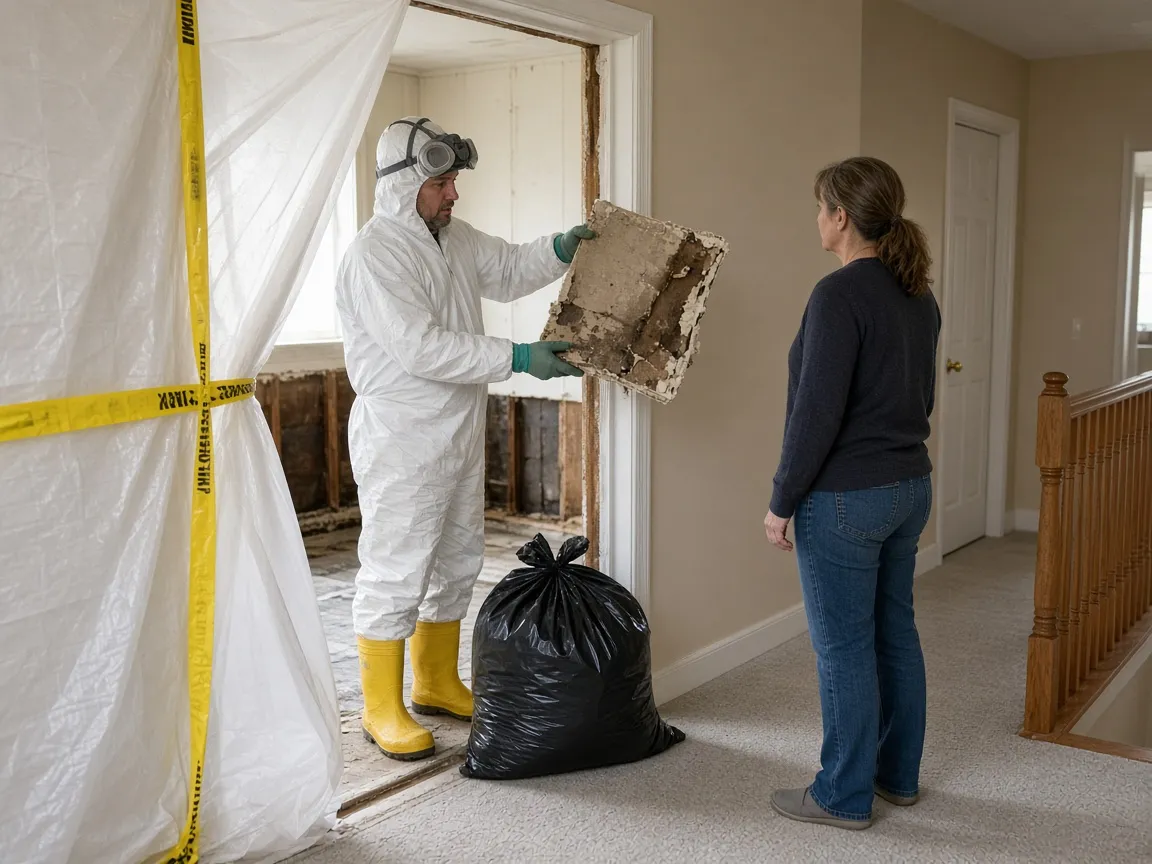
PPE, containment, removal, disinfection. We will show you what must be discarded.

Technician in protective equipment at a containment doorway showing a homeowner a piece of contaminated material that must be discarded.
FIG. FH — WHAT HAS TO GO

Is this a claim?

Backup coverage in BC often needs an endorsement. We still come. See insurance.

Service page →·Emergency →

Still wet? Call.

We answer 24/7 — a person, not a service. If you would rather not talk, tell us what happened in four taps and we will call you.